Cinematic flythrough.
A camera-driven journey through the dataset, cut for the room it has to win. Tender panels, boardrooms, booth walls, public consultation.
Every engagement runs the same five-step rhythm, whether it's a single project for a tender deadline, or a quarterly content pipeline. The first move is always the same: read the dataset.
Point Cloud Visuals is a small studio in Melbourne. For sensitive projects, the same person reads your dataset, scopes the project, and delivers the final frame, too:
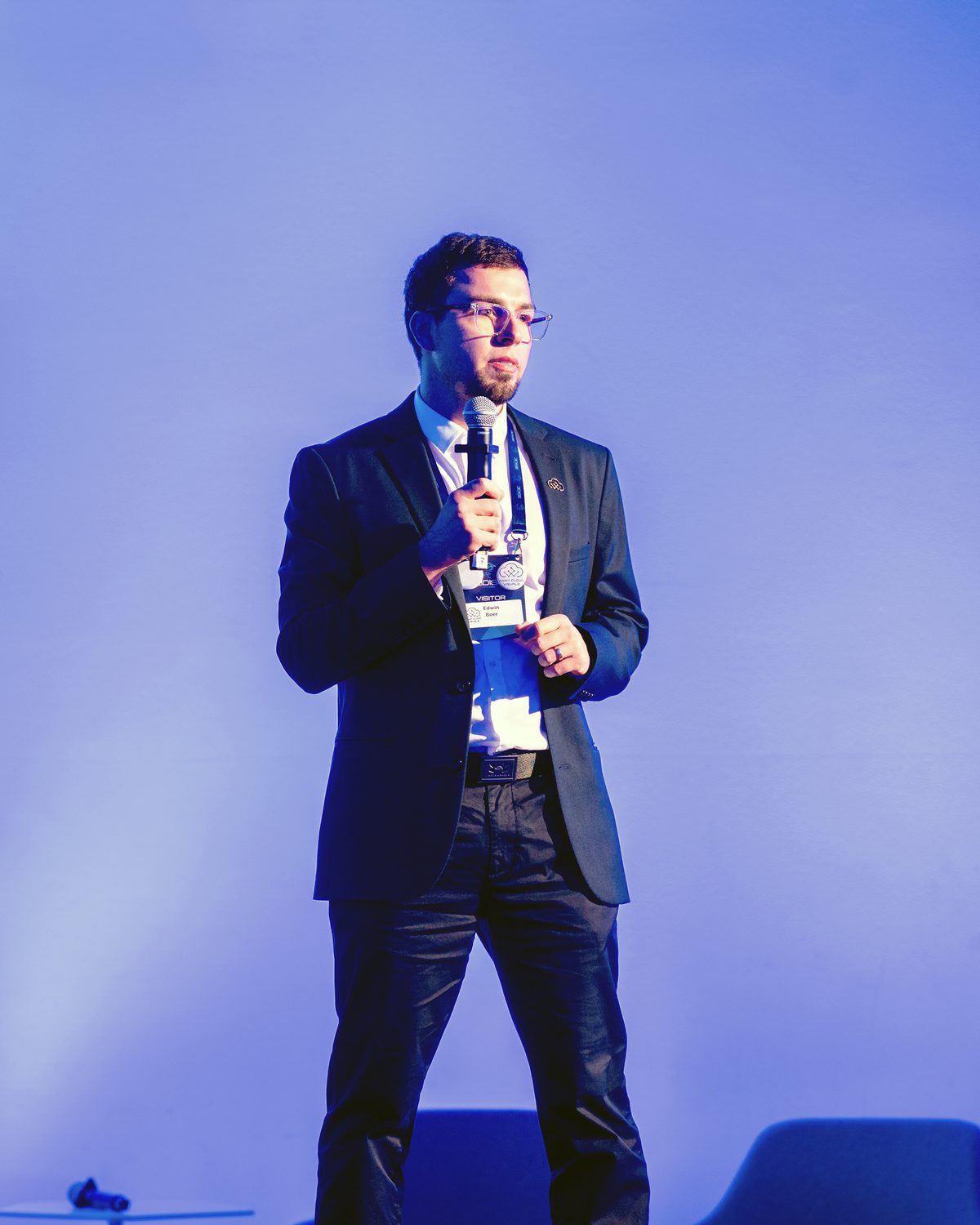
I'm Edwin. I spent six years basing multi-million dollar projects on 3D scans, and understood their fundamental role in everything designed within the existing built environment. Then I started working with surveyors and learning how the data is actually captured and produced. Realised the strongest technical teams struggle to communicate the value they bring and either loose out to those who do, or end up in price wars.
PCV exists because the communication problem can be fundamentally improved if you only get the visualisations right, so your data can speak for itself, and almost nobody solving it has stood on both sides.
Every project is scoped against the room it has to win: a tender panel, a board, a development committee, a public meeting, a trade-show floor.
The deliverable is reverse-engineered from that room.
Three rules the studio commits to before a project starts.
The reason recurring partnerships sit at 8 in 10.
A tender panel, a board, a council, a sales floor, each has a different attention span and a different language. The cut is built for that audience, not for portfolio.
End results are not defined by the most straightforward tools. We switch tools and adapt the latest AI workflows as needed to bring your vision to life.
Datasets are never shared, never used in marketing without written consent. NDAs signed before review when required. Half the work in the index sits under NDA.
No black box. The same five steps run for every engagement, what changes is the depth of each. Single project on the left, recurring partnership across the year on the right.
You send a sample: anywhere from a single scan to the full project drive. It's reviewed properly before anything is quoted.
Back to you with a written proposal: what we'd build, what it would cost, the timeline, and the rooms it has to win.
The studio builds the deliverable end-to-end, colour, motion, composition, audio. Unlimited reviews until you are 100% satisfied.
You get the master files in every format you'll use - booth, web, social, internal - so your project can help you bring in the next clients wherever they might see it.
Optional but recommended: a deployment brief covering channels, captions, sales handoff, and how to keep the asset working for 12 months.
The majority of our engagements pull from all three formats. A booth wall reel is rarely the only thing the dataset has to do.
A camera-driven journey through the dataset, cut for the room it has to win. Tender panels, boardrooms, booth walls, public consultation.
One dataset, fanned out: vertical social cut, looping booth wall, embedded site asset, sales-deck cuts. Built so the dataset can live in five rooms.
Monthly or quarterly cadence. The studio works against your scan calendar and a 12-month content roadmap, building once and deploying many.
Two paths from here. One pays nothing. The other pays for itself within the first new project or hardware sale — and keeps bringing in more work after.
Most studios in this niche lose dozens of projects they could have won — if only they'd had the visuals to speak in the rooms where they couldn't. Each loss can run into four, five, even six figures, and can be avoided for a fraction of that cost.
The first new big project, hardware sale, or tender win can cover the entire annual visualisation partnership fee with a healthy margin. The math gets straightforward once the first asset lands in front of a buyer.
See how it played out for other companies →Most studios start with a single project, then move to a recurring rhythm once the response from clients earns its place. Every fee is fixed, quoted in your currency and scoped against the actual dataset, never a price-list guess.
One dataset, one defined room to win, a tender, a board, a show floor.
For studios scanning every month. Calendar booked four quarters out, priority queue.
For studios where visuals are the front edge of the business, tenders, marketing, hardware sales.
Figures are shared in conversation, once the dataset is on the table. Every quote is fixed, written, and signed before work begins.
Most projects only need one or two of these. They're broken out separately so the base scope stays honest and you can add what you actually need, quoted alongside the project, never assumed in.
The first project shows you what the data is capable of. The second proves the response wasn't a fluke. By the third, the visuals are running the front of the business, and that's where the economics flip.
Recurring partners pay less per asset, get priority turnaround on tender deadlines, and stop having to scope every new piece of work from scratch. The studio holds the calendar, the creative direction, and the visual library.
Talk about a partnership →Studios who book a second project after the first delivery.
Most studios scanning monthly are on a quarterly pipeline by the third engagement.
Effective cost per deliverable on a Tier-02 pipeline versus one-off project pricing.
Two formats the studio runs alongside client production. Calendar limits apply, typically one engagement of each in flight at a time.
Keynotes, workshops, and panel work on visualisation as a tender lever, for surveying associations, capture hardware vendors, and AEC conferences.
Half-day deep dive on your visualisation pipeline. Reviews positioning, deliverable templates, sales motion, and the visual tools your team actually needs.
The questions that come up most after the proposal lands. Anything missing, write directly.
Yes. The first 30 minutes on your dataset is unbilled. NDAs signed on request before any file is opened.
The number in the proposal is the number on the invoice. Two review rounds are included; substantive scope changes after sign-off are quoted as a separate change order before any extra work starts.
You always own everything delivered, tenders, trade shows, web, social, email, client presentations, commercial reuse. No licensing restrictions. Source files (the working project) sit in the source-archive ZIP and are also yours.
Priority turnaround (48-72 hours) is available as an add-on at +35% of the base fee, subject to calendar. Recurring partners are first in the priority queue. Same-day delivery is not offered.
Quarterly pipelines roll quarter-to-quarter with 30 days' notice. Annual partnerships commit to the 12-month term and cover one paused quarter without penalty, useful for studios with seasonal capture work.
The next step
15-minute call, or a written proposal, same starting point either way. You leave with what we'd build, what it would cost, and what return to expect.
Or write directly to projects@pointcloudvisuals.com